DHANUYATRA Hirakud Temples Industries Textiles/Handlooms Institutions Festivals Dance & Folks
PASCHIM ODISHA - Western Odisha |  |
Western Odisha, also referred as Kosal is a territory in western part of Odisha, India, extending from the Kalahandi district in the south to the Sundargarh district in the northwest. Western Odisha includes the districts of Balangir, Bargarh, Boudh, Deogarh, Jharsuguda, Kalahandi, Nuapada,Sambalpur, Sonepur, Sundargarh, and Athmalik Sub-division of Angul Dist.
Bargarh
Bargarh is a part of western Odisha, as a district, came in to existence on 1st April 1993. It is bordered in the north by the State of Chhatisgarh in the east by Sambalpur district, by the Balangir and Subarnapur district in the south and flanked on the west by the district of Nuapara. The administrative head quarter of the district is located at Bargarh town. It is on the national highway no. 6.
The Worlds biggest open air theatre (festival) known as Dhanuyatra is hosted in Bargarh during the month of December - January that continues for around 11 days. During this festival the town which has a population of about 1 lakh spread over a few square miles, turns in to a unique epic town of Mathura. The festival portrays all the episodes of ‘Kans Vadh’ (The killing of Kans).
History
To the left bank of Jira RIver lies Bargarh. The original name of the place was “Baghar Kota” as known from an inscription of the 11th Century A.D. The another part of the district popularly known as “Borasambar” was formerly the headquarters of the Borasambar Zamindari extending over 2178 Sq.Kms. Later, the headquarters of the Zamindari shifted to Padampur, one of the present sub-divisional headquarter.
Geography
The Bargarh district lies between 20° 43’ to 21° 41’ North latitude and 82° 39’ to 83° 58’ East longitude. It is one of the western most districts of the State of Orissa and came in to existence as a district from 1st April 1993. It is bounded on the north by the State of Chhatisgarh and on the east by the district of Sambalpur, on the south lies the district of Balangir and Subarnapur and on the west the district of Nawapara. The district has an area of 5837 Sq.Kms.
Tourism
The Bargarh district headquarter is on the National Highway No.6 running from Kolkata to Mumbai, hence well connected to the rest of the country with comfortable road. There is a Railway Station and the nearest Airport is Raipur (220 Kms) & Bhubaneswar (350 Kms). The best period of the year to visit this place is between October to March. During this period the Dhanu Yatra Festival (World’s biggest open air theatre) is observed here. There are a number of good hotels besides numerous Govt. Circuit House and Guest houses in the district providing accommodation to tourists and visitors through out the year. The near by tourist spots are well connected to the district headquarter with good road and communication facilities.
Sambalpur
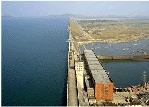
An ancient centre of diamond trade, Sambalpur is famous for its textiles, folk dance and music and also for the mighty Hirakud Dam, the longest earth dams in the world.
Sambalpur District is the westernmost district in the state of Odisha, India. The historic city of Sambalpur is the district headquarters.The district is located in the Mahanadi River basin. It has a total area of 6,702 square kilometers, of which almost 60% of the district is covered in dense forest. The district is bounded by Deogarh District to the east,Bargarh and Jharsuguda districts to the west, Sundergarh District to the north, and Subarnapur and Angul districts in the south.
Sambalpur city is the connecting city between Chhattisgarh and Odisha. Whereas it used to be known for its importance as a diamond trading centre, nowadays it is mainly known for its textiles. It’s a good place from which to explore the surrounding forests and spot some of the rare species still roaming the area in one of the wild life sanctuaries, such as the well-known Badrama sanctuary.
It is said that Sambalpur is mentioned in the book of Ptolemy (2nd century AD) as Sambalaka on the river Manada (the Mahanadi river). This gateway to the exotic charms of the western region of Odisha was the cradle of an ancient civilization and is an important landmark in India’s cultural history.
Sambalpur had also been known as ‘Hirakhand’ meaning ‘Land of Diamond’. In the past Sambalpur was famous for diamond mining and trade. Even now, the adjoining areas yield a large volume and value of semi-precious stones, if not diamonds.
History has to say that Samudragupta in the 4th century, defeated King Mahendra of Koshala, the kingdom that included Sambalpur. During the 5th and 6th centuries Sambalpur came under the rule of Sarbhapuriyas. Towards the 7th century it passed in to the hands of Panduvansi king Trivaradeva. Towards the close of 9th century king Janmajaya I Mahabhavagupta extended his empire which comprised the modern districts of Sambalpur and Bolangir. Hence forward, his dynasty came to be known as the Samavansi dynasty. During the last part of the Samavansi rule, Sambalpur was occupied by the Kalachuris of Ratnapua. The 13th century saw a bitter fight between the Kalachuris and the Gangas. Later on, the Gangas occupied Sambalpur.
During the middle of the 14th century Ramai Dev laid the foundation of the Chauhan rule in Western Odisha. However, the Chowhan rule came to a close in april,1800, when Sambalpur was occupied by the Marathas. After the British occupied Orissa and bitterness between the British and Marathas ripened, the former found a convenient route via Sambalpur and annihilated the Marathas. Sambalpur was occupied by the British on 2nd January, 1804. Finally it passed on to the Brithish in 1817. The subsequent years witnessed the movements of the Kandhas and Binjhal Zamidars against the British and their poppet ruler in Sambalpur was Rani Mohan Kumari. Although the modern concept of nationalism was not activating force, one could see the spirit of freedom and hatred of foreign rule reflected in the struggle. The period recorded the heroic sage of Surendra Sai. (Most renowned freedom fighter from Western Odisha).
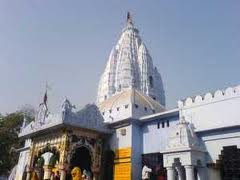
Hirakud Dam and its lake with the winter migrant bird visitors from Siberia, leaning Temple of Huma and the wildlife Sanctuary at Badrama (Ushakuthi), Khalasuni and Debrigadh (wildlife sanctuary in the Barapahad mountain range – Chourasimal), Budharaja Temple, Gudguda waterfall, Ghanteswari Temple attract tourists. Nearby places like the Narsinghnath and Harishankar, (Bolangir) Pradhanpat (Deogarh) Hanuman Batika, Mandira Dam and Khandadhar (Rourkela) attracts tourists to its serene surroundings.The temple of importance are the Samalai Mandir and the Budharaja Temple, dedicated to Lord Shiva and is perched atop the Budharaja hill. Sambalpur is easily accessible by rail and road.
BOLANGIR JHARSUGUDA ROURKELA KALAHANDI BHAWANIPATNA KORAPUT SONEPUR NUAPADA SUNDERGARH BOUDH
DHANUYATRA Hirakud Temples Industries Textiles/Handlooms Institutions Festivals Dance & Folks
SAIL(Rourkela) Vedanta ACC(Bargarh) MCL(Burla) Railways |